

(William Hallstrom)
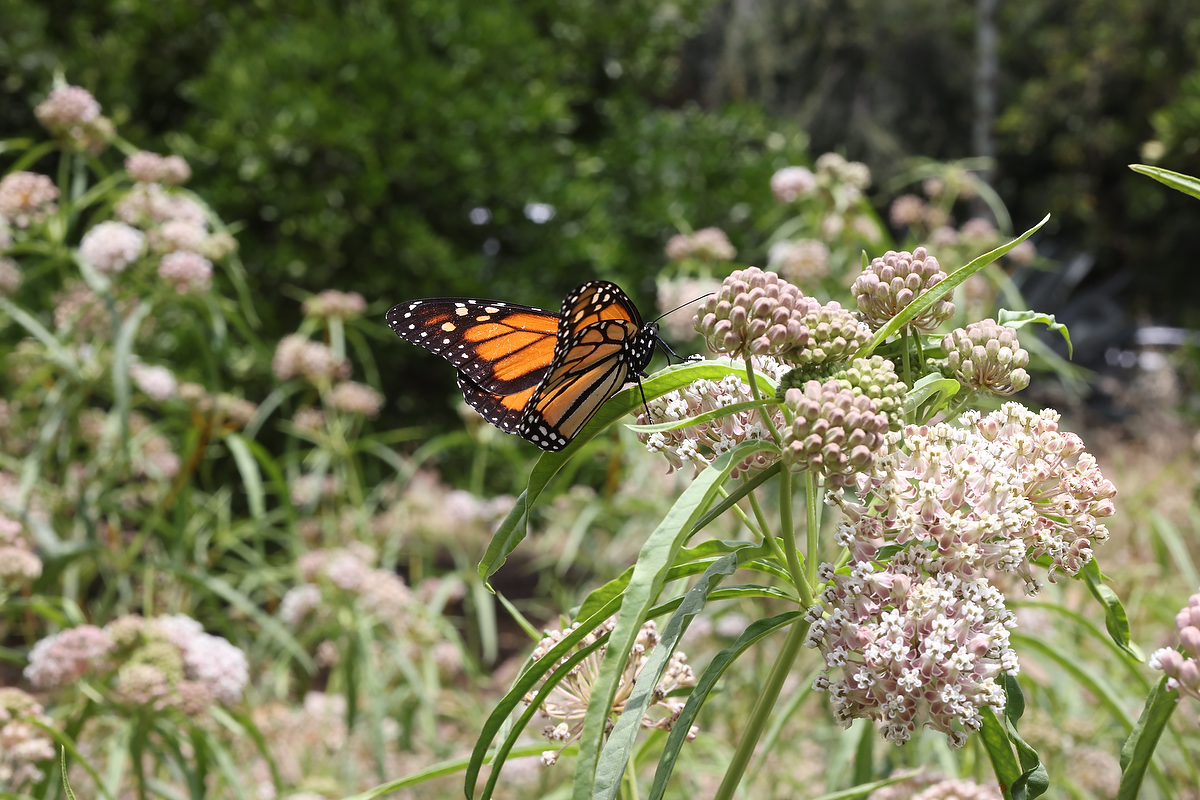
The monarchs are once again teeming on the milkweed patches at Arlington. We are lucky, I think, to have a few spontaneous eruptions of narrow leaf milkweed in the garden. Narrow leaf milkweed is our local host to monarch butterflies. This is the plant that they lay their eggs on, which provides food for their caterpillars. There are many stories of gardeners struggling to keep it alive, so when it volunteers, I think it is a gift.
I see the butterflies with their random flight patterns, seemingly bumbling and floating, with only the occasional appearance of a deliberate move. They seem to echo the breeze. Butterflies are capable of a number of different flight dynamics from gliding, to zigging and zagging, to more straightforward types of flight. They clap their wings together with a fair amount of force to get a burst of speed. Rapid movements and erratic flight patterns help them avoid predation.
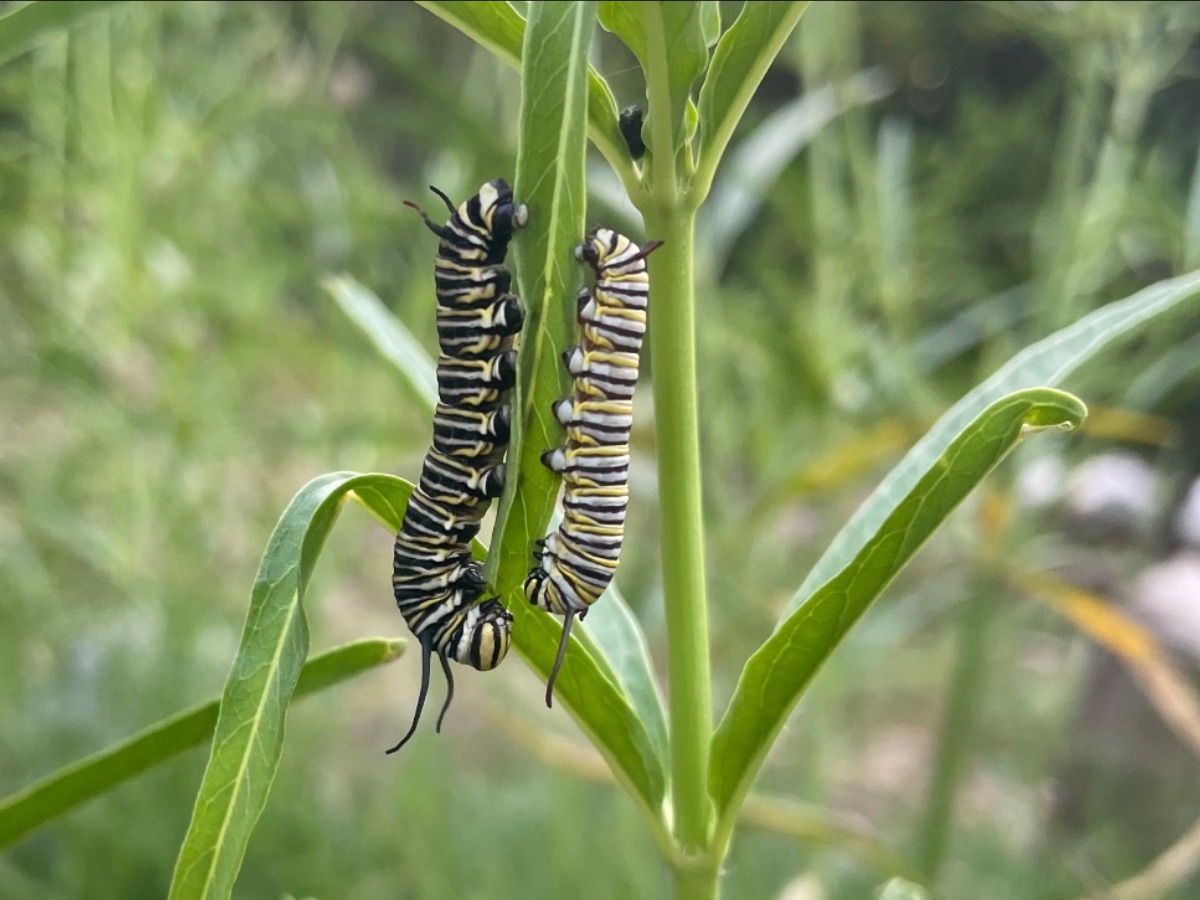
The monarch’s caterpillars, of course, have developed the ability to digest the milkweed’s toxic vegetation, which is the plant’s natural defense against other herbivores – one of those special relationships that occur over very long spans of time. This is the deeper story of the plants we call native, which exist in the context of place and time. It is a subtle relationship that develops slowly, over thousands to millions of years. Relationships like these aren’t there for many of the plants humans have brought into our landscapes from elsewhere, even those we brought a few hundred years ago.
The first known butterfly lived 190 million years ago, which of course we all remember as being in the first part of the Jurassic period. The first butterflies and moths probably survived on pollen from gymnosperms like pine trees or cycads, but they were able to adapt to the arrival of flowering plants and have since evolved in tandem with them. Their larvae – caterpillars – eat the leaves of flowering plants and many species have obligate host flowering plants [a plant that the species needs for its survival].
Monarchs are remarkable for their ability to migrate, just like some birds, over thousands of miles. Monarchs cannot live in very cold environments, so they must move into warmer climates in the winter. They combine observation of the position of the sun in the sky and their own internal clock to navigate in the right direction, and it seems that they are also able to detect the Earth’s magnetic field for this purpose as well. Since they travel such long distances, successful migration depends on the existence of a widespread trail of habitat over their route.
The decline of monarch populations in recent times is considered to be a strong canary-in-the-coalmine indicator of environmental change; and the decline of suitable habitat along their migration routes is one of the prime issues. Narrowleaf milkweed (Asclepias fascicularis) and showy milkweed (Asclepias speciosa) are two monarch habitat species appropriate for our area.
When I first read nursery descriptions of our native milkweeds and heard anecdotes from gardeners, as I remember it, I got the impression of (what seemed like) a persnickety plant. Narrow leaf milkweed is winter dormant, and likes a good deal of sun, but also apparently likes moister environments, while blooming in the spring into the summer. The native plants I had been learning about previously were either of the sun-loving-sage-scrub type or the shade-loving-woodland plant type, both of which tend to not need extra water in the drought season. Where would I find a plant that wanted extra summer water around here? I was stuck in the gardeners mindset.
When I saw milkweed growing by a sun-drenched mountain seep up in the San Gabriel Mountains in the midst of summer, I saw immediately where the plant fits in. I also came to learn that we used to have springs and even marshes scattered across the San Gabriel Valley, natural elements of the watershed here. You would probably have found grasslands and other stream adjacent plant communities in these areas; places where milkweed once thrived.
Places where some of the natural (not artificial) parts of the watershed still exist can be found at Eaton Canyon or Hahamongna Park, but the parts downstream are mostly channelized. The spread of our flood control infrastructure of dams, culverts, and catchments began about a hundred years ago. In its wake, we have seen the eradication of ecosystems that were probably already struggling, such as the willow forests whose last remnants can be seen at Whittier Narrows. Groundwater levels have declined over the same period.
Milkweed and the monarchs are only one key visible indicator of habitat loss that affects many flora, fauna, fungi and the rest. I think we need to remember these butterfly icons, but gardeners—the tenders of the land—should realize that they are just the top layer of a deeper problem. The decline of monarch butterflies is the result of the loss of a significant and unique aspect of Los Angeles ecology.
Los Angeles is one of the most biodiverse regions in the most biodiverse state in the U.S. How much of this biodiversity can we can afford to lose? We have lost a sense of reciprocity that our ancestors had for their non-human progenitors. The scientist Doug Tallamy promotes the idea that our built environment could offset habitat loss, but it takes work. Native plant gardening, including plants and tending native milkweeds, can promote a shift in our approach to landscape management, from being the primary actors to something more akin to shepherds of a self-sustaining system – a system in which towhees, squirrels, and monarchs are also gardeners.

Recent Comments