

(Director of Horticulture, Tahereh Sheerazie)
A couple weeks ago, we had an event at the garden for which Heather [a gardening colleague at Arlington Garden] and I made arrangements. The last time we did this for an event, Heather and I got ourselves to the flower market in downtown at 6am! This time around, and much the wiser for it, we did a walkabout at Arlington Garden.
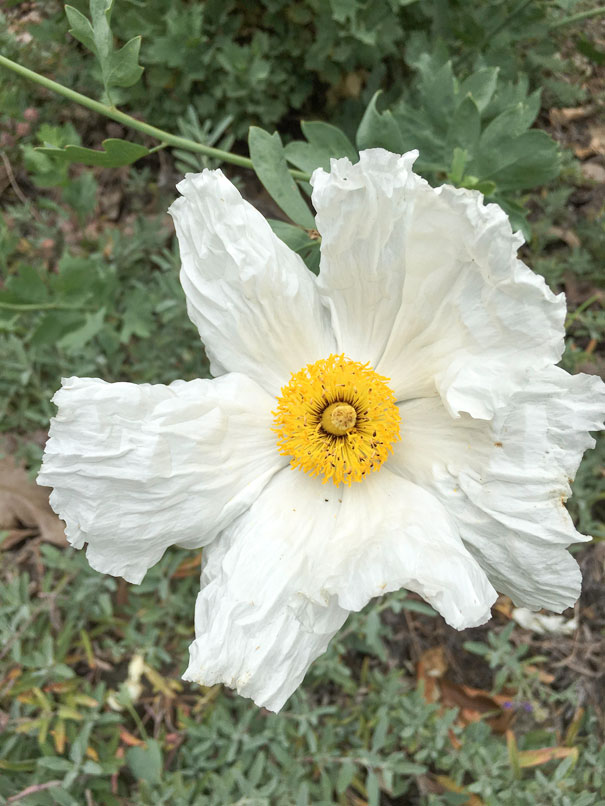
In the wildflower walk area, we found many flowers for our arrangements, including what became our screamingly-obvious showstoppers: tall stalks of Romneya coulteri (Matilija poppies) blooming alongside clouds of Artemisia californica (California sagebrush). The papery white petals of Romneya frame brilliant discs of golden pollen. The large flowers don’t last long in a vase, full disclosure, but we used them anyway.
On almost equally tall stalks, but adorned instead with small pale pink flowers, were Salvia apiana (white sages) in full bloom adjacent to the poppies. White sage blossoms last very long in a vase and dry beautifully. More tall stalks from this area that we used in the mix included yellow Oenothera elata (Hooker’s evening primrose), which are just starting to bloom, and bunches of tall Symphyotrichum chilense (Pacific aster).
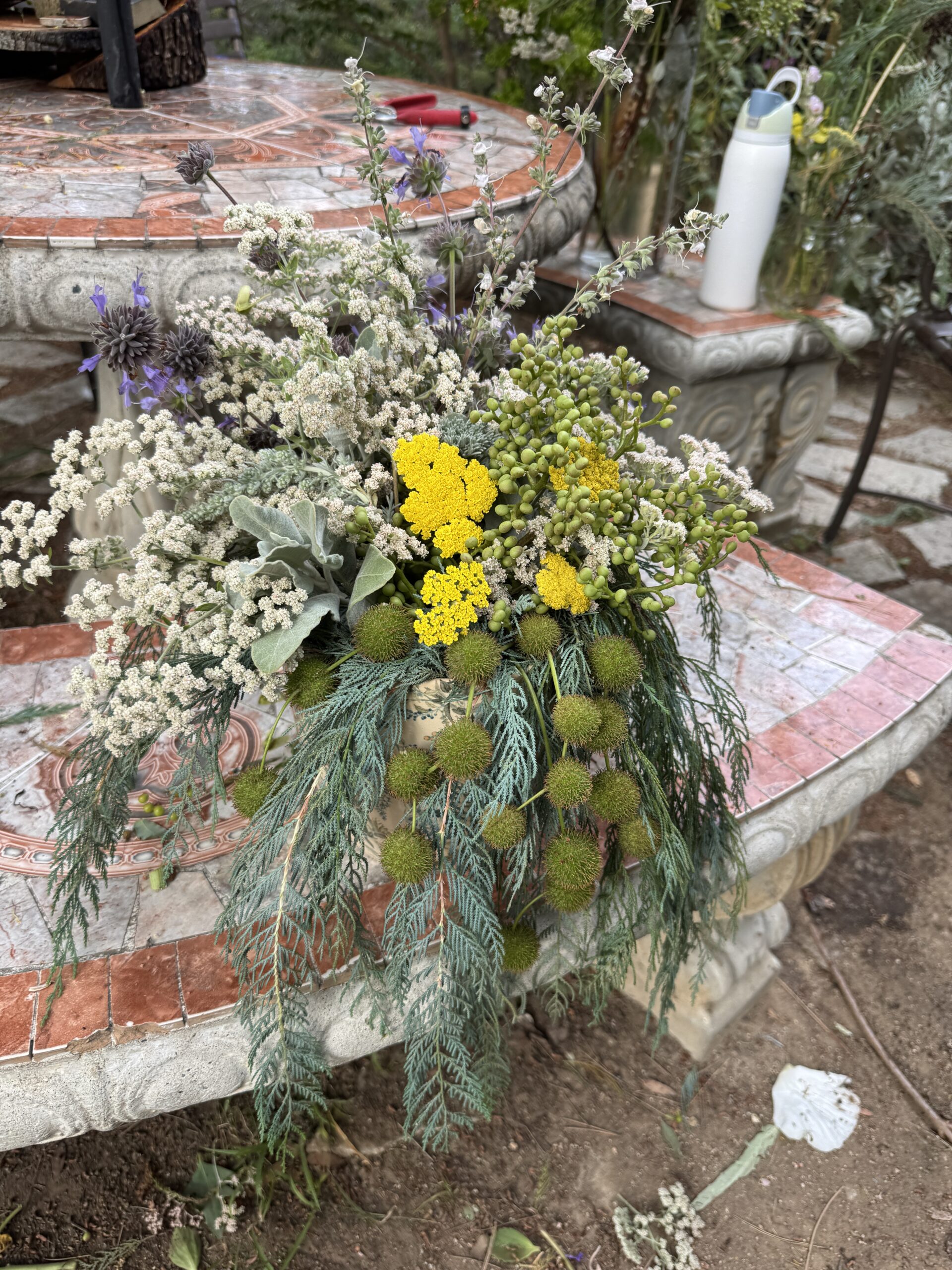
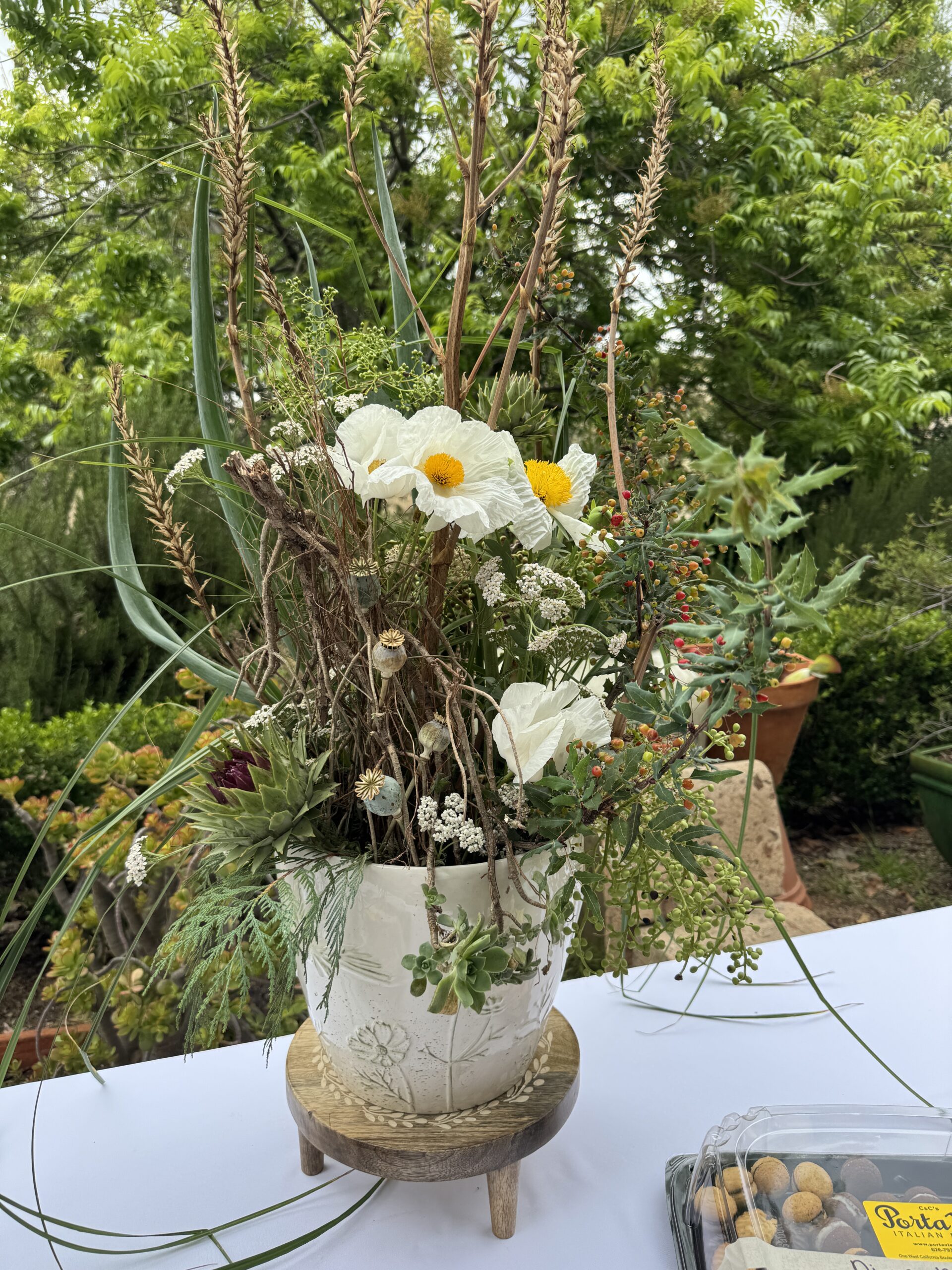
One step down in height, the purple flowers of Salvia leucophylla (purple sage) are in full bloom now, although they are brittle and not easy to use in arrangements. We also have many Achillea millefolium (common yarrow) throughout the garden, which make lovely filler for arrangements, as do the spectacular Eriogonum giganteum (St. Catherine’s lace), which bloom in massive umbels starting in the spring.
Other species blooming in the garden now and worth checking out are Erigeron glaucous (purple beach aster), some brilliant hybrid penstemons created by AG Board President Sybil Grant, native monkey flowers including Diplacus longiflorus, and a plethora of Australian plants including Leptospermum laevigatum (tea tree) and various Grevillea species.

Recent Comments